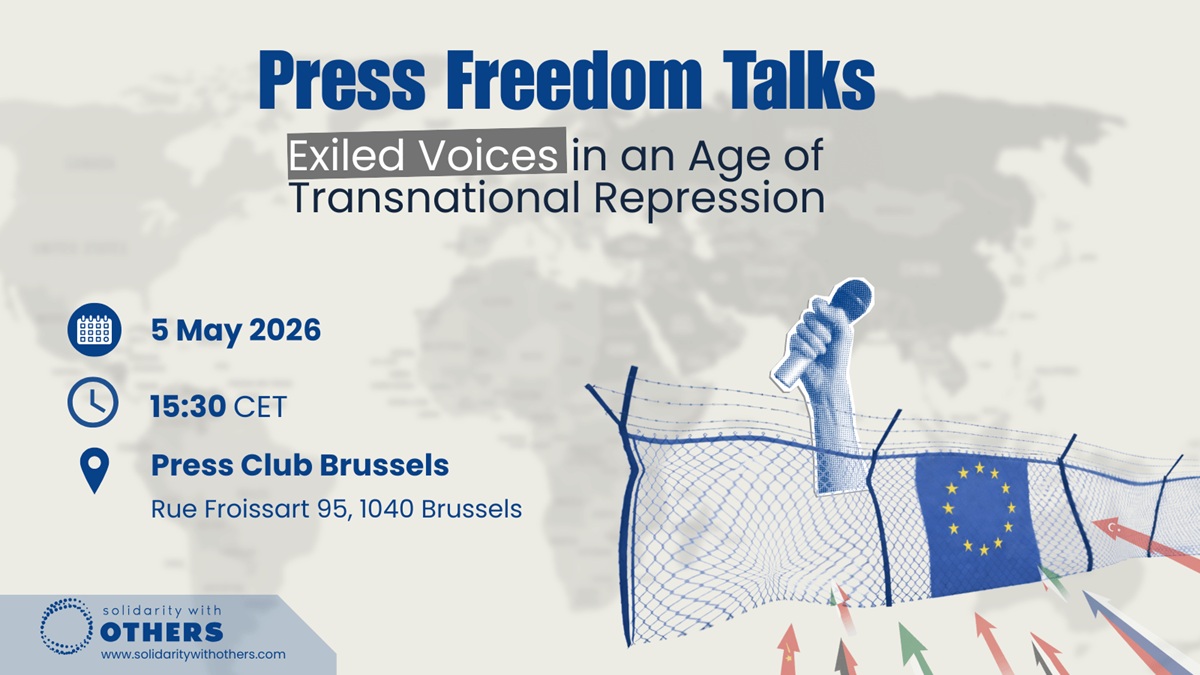
Across Europe, many #journalists continue their work in #exile after fleeing persecution, censorship, war, and threats to their safety. Yet crossing a border does not always end the danger. Exiled journalists often remain exposed to #surveillance, #intimidation, #harassment, and other forms of #transnational #repression.
This discussion will bring together exiled journalists, experts, and press freedom advocates to reflect on the lived realities of journalism in exile, existing protection gaps, and policy recommendations needed to strengthen free media, democracy, and the public’s right to information.
The event will be held in English.
Registration: https://lnkd.in/ekyfzkhr
We look forward to welcoming you to this timely discussion.
Across Europe, growing numbers of journalists have been forced into exile because of political persecution, censorship, war, criminalisation of independent reporting, and direct
threats to their safety. For many, leaving their country does not end the danger. Journalists who seek refuge in European Union countries may still face surveillance, online harassment, intimidation, legal pressure, and threats aimed at family members or colleagues back home. This pattern is increasingly understood as transnational repression, meaning the extension of authoritarian pressure across borders to silence critical voices.
International and regional bodies have already taken important steps to address this problem. The UN Special Rapporteur’s report Journalists in Exile1 have drawn attention to the threats faced by journalists in exile and to the obligations of host states to protect them. While the Council of Europe Parliamentary Assembly has described transnational repression as a growing threat to human rights, democracy, and the rule of law2, the European Parliament prepares to vote for a second transnational repression report3 in the upcoming months. These are important steps, but implementation remains uneven and major gaps in protection persist.
Civil society and media support initiatives have also developed meaningful responses, including legal aid, training, psychosocial support, language learning, equipment, professional networking, and resources that help journalists continue reporting in exile. The existing support, while valuable and appreciated, is still far from enough.
Thinking that World Press Freedom Day is the right moment to reflect on this often overlooked side of press freedom, Solidarity With OTHERS is organising the second edition of Press Freedom Talks, following last year’s event. The panel will bring together exiled journalists, experts, and press freedom advocates to share first-hand experiences, identify needs and protection gaps, and reflect on the responses that are still needed at European and international level. By centering the realities of journalism in exile and the impact of transnational repression, the discussion aims to demonstrate existing protection gaps and explore policy recommendations needed.